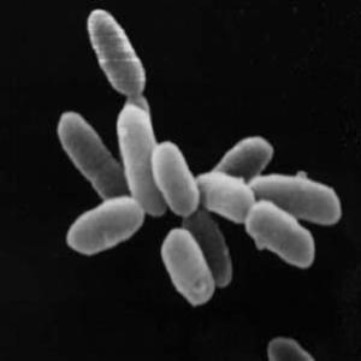
 | Archaebacteria shares traits with both bacteria and eukaryotes. Most Archaebacteria are obligate anaerobes; they can only live in areas without oxygen. All archaebacteria are unicellular. They are prokayotes - they have no membrane-bound organelles. Cells consist of a thinck cytoplasm that contains all of the molecules and compounds of metabolism and nutrition. The cell walls are made of pseudopeptidoglycan and allows archaebacteria to maintain its shape. There is no true nucleus, and the genetic material floats freely within the cytoplasm. DNA consists of a single circular molecule. Plasmids are present in many archaebacteria.
Divergent Event Archaebacteria are believed to have evoled some 3500 million years ago. They possibly diverged from Eubacteria. The last common ancestor is thermophile. In the past, both eubacteria and archaebacteria comprised kingdom monera. Due to archaebacteria's ability to survive in extreme environments, scientists predict that the archael lineage may be the most ancient that exists on earth. Other biologists argue that Archae and Eukaryota arose from bacteria. |
Some archaebacteria are chemoautrotrophs, producing their own frood from chemicals found in their environment. For example, Halobacterium is an extreme halophile that survives in extreme salty environments.
Some archaebacteria are heterotrophs, feeding off of other organisms. For example, mathanogens obtain energy by using carbon dioxide to oxidize hydrogen to produce methane as a waste product.
Archaebacteria go through intracellular digestion. As unicellular organisms, archaebacteria do not have nervous, respiratory, or circulatory systems. Their circulation is through diffusion.
Archaebacteria undergo asexual reproduction through binary fission, in which single-celled organisms are divided into half after the DNA has been replicated.
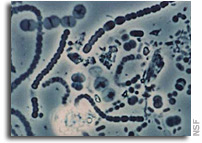 Archaebacteria - Methanogens | 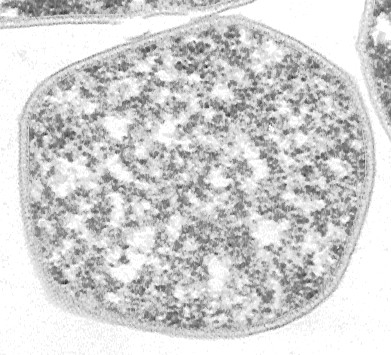 Archaebacetria - Sulfolobus |
