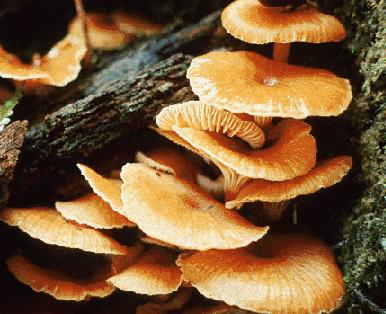
 | Organisms in the kingdom fungi are specialized to be decomposers - they break down organic material. These organisms consist of eukaryotic cells, and most have very small nuclei with little repetitive DNA. Unlike plants, fungi are non-vascular organisms and lack true roots, leaves, and stems. The organisms' cell membranes are made of ergosterol; their cell walls are made of chitin. Although fungi have a cytoplasmic ultrastructure like plants, their main body called mycelium is comprised of hyphae, a mass of threadlike projections. Fungi are more related to kingdom animalia than kingdom plantae. Like animals, fungi store food as glycogen.
Divergent Event One billion years ago, multicellular life emerged. While phylogenetic sysstematic suggests that fungi evolved from a flagellated ancestor, DNA sequence data indicates that the ancestor of fungi is unicellular. Ancestors of animals and fungi separated into different lineages about one billion years ago. |
Organisms in the kingdom fungi are generally multicellular, yet some are unicellular.
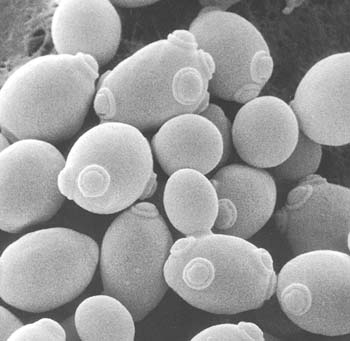 Yeast - Yeast is a primary example of unicellular fungus. Yeast thrive in moist environments such as plant sap and animal tissues where there is a sufficient supply of soluble tridents (sugars and amino acids). | 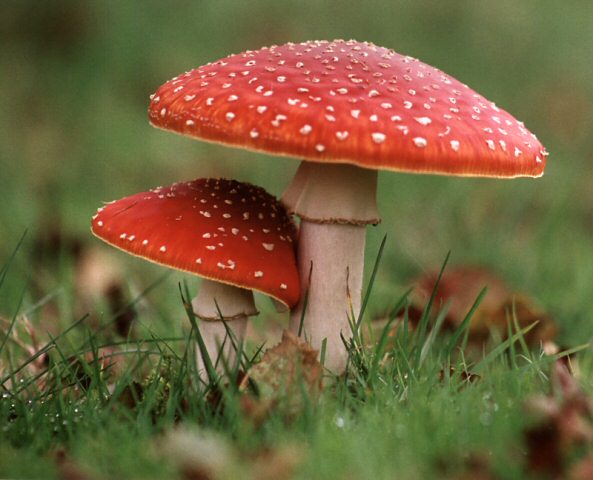 Amanita Muscaria - Most fungus, like amanita muscaria, are multicellular. They are composed of hyphae with tubular walls strengthened by chitin.
|
All organisms in the kingdom fungi are heterotrophs - they feed on other organisms by breaking down organism materials. There are three types of heterotrophic fungi: parasitic, symbiotic, saprobic. (top to bottom) Athlete's foot fungus - this is an example of a parasitic fungi that grow their hyphae in tissues of living organisms. Blue toadstool (Entoloma hochstetteri) - this is an example of a saprobic fungi that uses non-living organic material for consumption. Mycorrhizae - this is an example of a symbiotic fungi; the mycorrhizae lives in a symbiotic relationship with plant roots. | 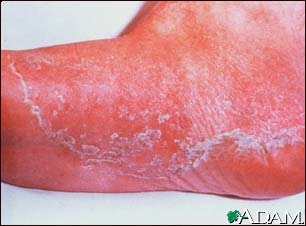 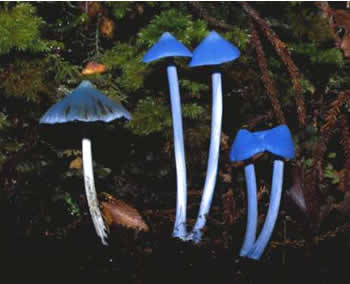 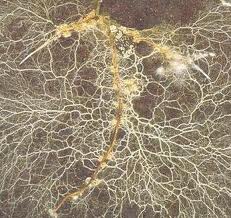 |
Fungi undergo extracellular digestion - they produce exoenzymes to break down the food and absorb everything that these enzymes break down. Most fungi use modified hyphae - fungal hyphae forms mycelium that penetrates the material on which the fungus feeds.
Fungi do not have tissues or organs that support nervous, circulatory, and respiratory systems.
Some fungi reproduce asexually through budding or spore formation. Some fungi reproduce sexually though gametic fusion.
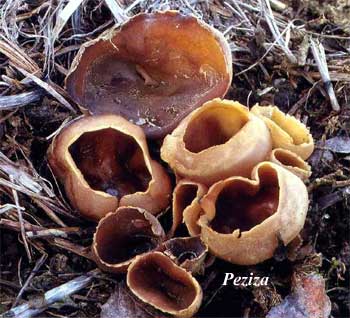
Asexual ReproductionMold 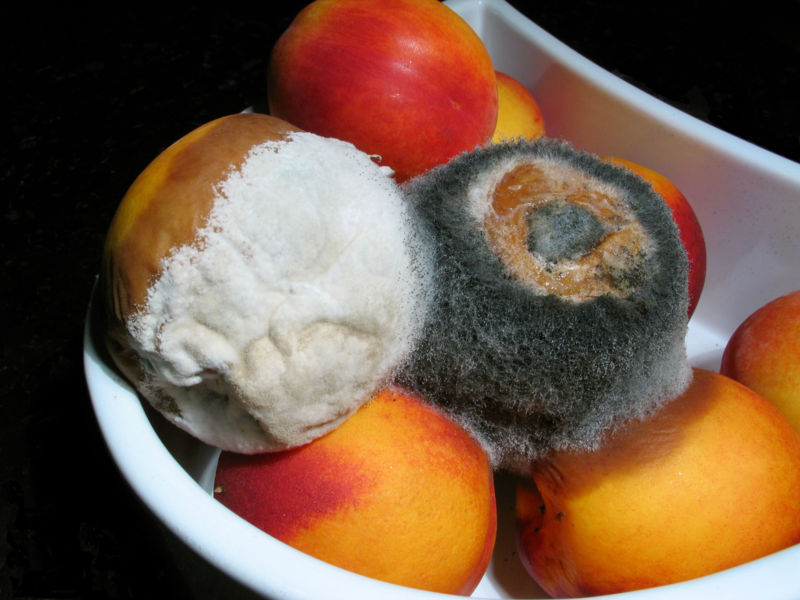 | Sexual ReproductionAleuria aurantia (orange peel fungus) 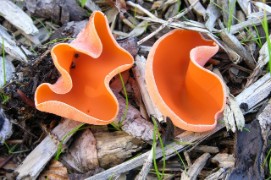 |
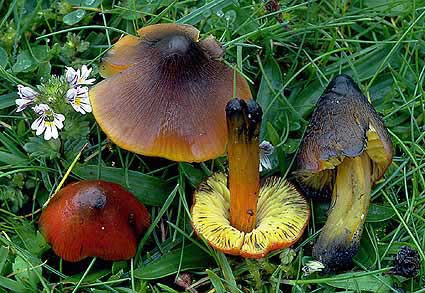
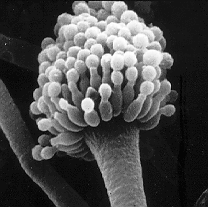
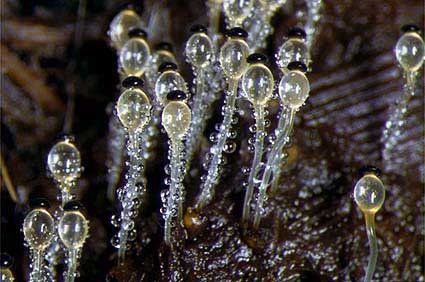
Four Phyla
Pictures citation:
http://www.flickr.com/photos/smiley117/4092676360/
http://thestygianport.blogspot.com/2007_10_01_archive.html
http://www.sjhsyr.org/sjhhc/hidc07/encyclopedia/2/2468.htm
http://www.landcareresearch.co.nz/research/biosystematics/fungi/foray/saprobes.asp
http://www.mycorrhizalfungi.info/cgi-sys/suspendedpage.cgi
http://www.infobarrel.com/Facts_About_Mold
http://www.biopix.com/photo.asp?photoid=60972&photo=aleuria-aurantia
http://www.mycokey.com/AU/Systematics/SystematicsBasi.html
http://www.palaeos.com/Fungi/Ascomycota/C00040Pezizomycotina.html
http://www.mold.ph/trichophyton.htm
http://www.mycokey.com/AU/Systematics/SystematicsZygo.html
http://www.fs.fed.us/wildflowers/interesting/lichens/habitat.shtml
